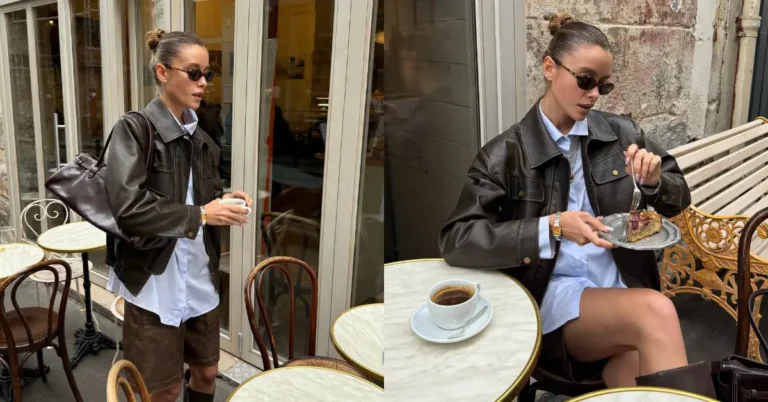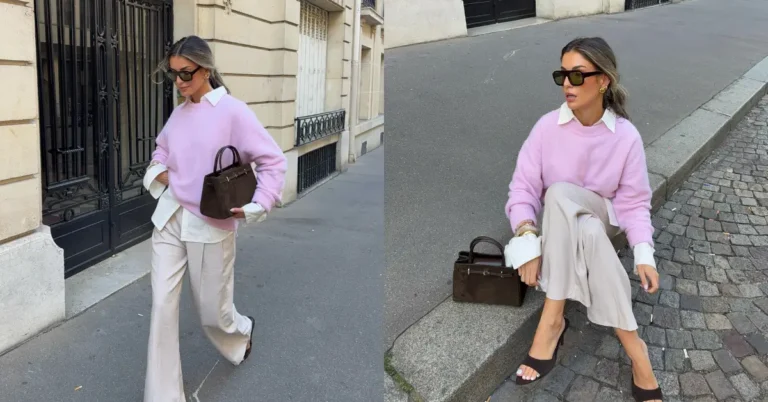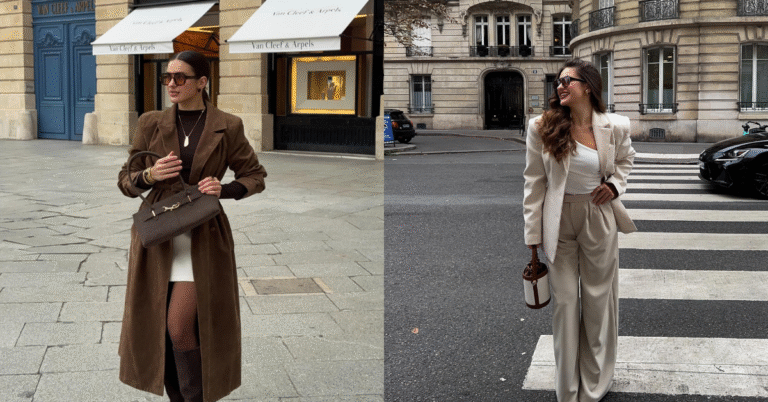

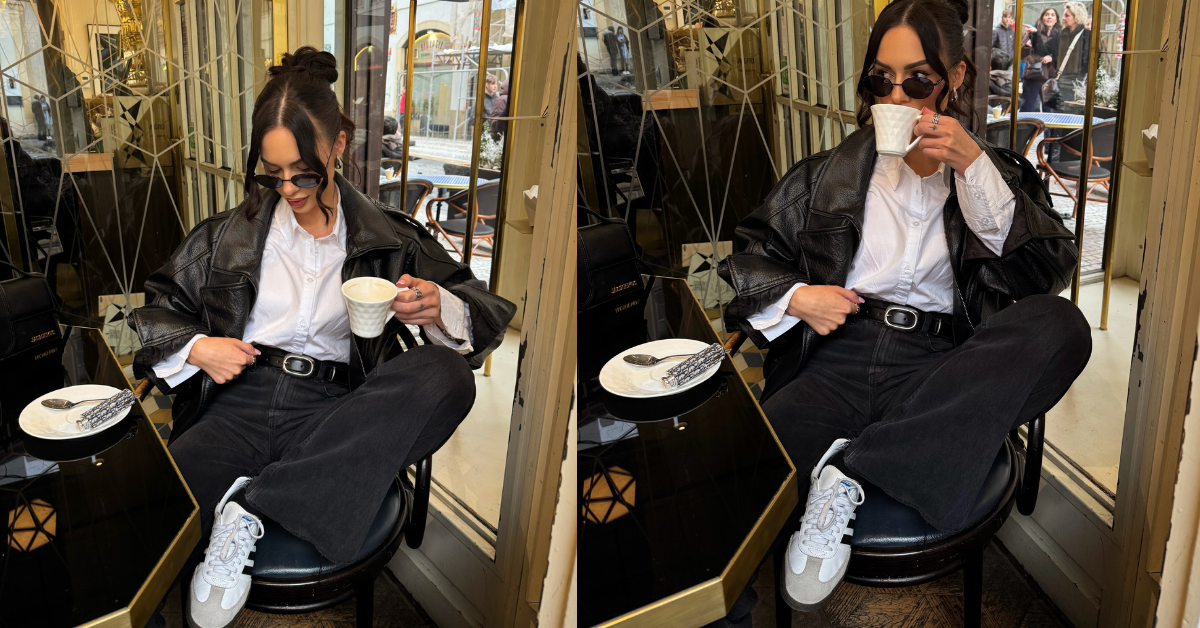
“Professional” used to mean a pretty narrow costume: stiff tailoring, fussy shoes, and outfits that looked good only if you never moved your arms. But hybrid work changed the job.
Now your workwear has to do two things at once:
- look credible in-person (office days, client meetings, leadership visibility), and
- function in real life (commuting, video calls, desk work, unpredictable schedules).
That’s why the new sweet spot is polished and flexible, not “business formal” and not “athleisure pretending to be a blazer.” Even workplace norms reflect this shift: hybrid is still a dominant pattern for many remote-capable roles, and in-office time tends to cluster around a couple of days a week rather than five.
This guide gives you a repeatable system: how to build outfits that read modern, feel comfortable, and adapt to Office, Hybrid, and Meeting days without turning into a corporate uniform.
One honest limitation: if your workplace is very conservative (court, high-finance client-facing, strict uniform policy), you’ll still use this framework, but your “flexible” pieces will need to look more traditional.
Quick answer for skimmers
- Build your wardrobe around 3 outfit formulas you can repeat (office day, home day, meeting day).
- Choose structure in one piece (blazer, trouser, coat, crisp shirt). Keep the rest comfortable.
- Use a simple palette: 2 neutrals + 1 accent so outfits mix easily.
- Prioritize “credible comfort”: good fabrics, clean lines, intentional fit.
- Update polish fast with shoes, bag, and grooming (small things signal professionalism quickly).
- Use the “camera-ready top” rule for video meetings: neckline, collar, and sleeve finish matter most.
- Tailor hems and sleeves. Skip complicated tailoring on cheap fabric.
If you only do one thing: pick one “anchor” you wear at least weekly (a trouser, blazer, or dress) and make it excellent: fit, fabric, and comfort. Everything else becomes easier.
The decision framework: dress for your day, not for a fantasy role
A lot of modern offices have shifted toward “use your judgment” dress norms, especially with hybrid schedules. Even large institutions have referenced flexible approaches like “dress for your day.”
Use this simple framework every morning:
1) What is the highest-stakes moment today?
- Client meeting
- Presenting to leadership
- In-person brainstorm
- Interview
- On-camera calls
Dress for that moment, then make the rest comfortable.
2) Do you need “authority,” “approachability,” or “creativity”?
Pick one main signal.
- Authority: structure, darker neutrals, sharper shoes
- Approachability: softer textures, lighter neutrals, less contrast
- Creativity: one interesting element (color, accessory, silhouette)
3) One structured piece, one comfortable piece, one finishing piece
- Structured: blazer OR tailored trouser OR crisp shirt OR coat
- Comfortable: knit OR soft blouse OR stretch trouser OR tee under blazer
- Finishing: shoe OR bag OR belt OR simple jewelry
That’s the bridge between style and function.
Step 1: Build three outfit formulas that match hybrid life
If you already have a work wardrobe that functions well, you can skip this section and jump to “The Modern Details That Make You Look Polished.”
Formula A: The Office Day Uniform (polished, walkable, practical)
- Tailored trouser or dark jean (if allowed)
- Knit, tee, or blouse that holds its shape
- Third piece: blazer, cardigan-jacket, trench, or structured overshirt
- Walkable shoe: loafer, sleek sneaker, ankle boot
Why it works: you look intentional, but you can commute and move.
Formula B: The Home Day Uniform (camera-ready, comfortable, not sloppy)
- Elevated knit set or ponte pants
- A top with a strong neckline (crew, boat, collar, or clean V)
- Optional third piece for meetings: blazer, knit jacket, or crisp shirt worn open
This won’t work if your tops are all stretched necklines and clingy fabrics. Camera magnifies “tired” materials.
Formula C: The Meeting Day Upgrade (credible, sharp, not stiff)
- Matching set (blazer + trouser) OR a column dress + jacket
- Shoe and bag that look deliberate
- One focal point: earring, belt, lipstick, scarf
This is the outfit you wear when you need your presence to land.
Step 2: Choose the right “workwear core” (what you buy and re-buy)
A corporate uniform usually happens when you buy five copies of the same safe piece because it’s easy. The goal here is different: a small core that mixes, plus a few personality levers.
The modern workwear core (the pieces that do the heavy lifting)
- Tailored trouser (ponte, wool blend, or drapey suiting fabric)
- Blazer (slightly relaxed, clean shoulder line)
- A knit that holds shape (fine gauge, minimal pilling)
- A crisp shirt (or structured blouse)
- A third piece alternative to the blazer (cardigan-jacket, trench, overshirt)
- A polished flat (loafer or sleek sneaker, depending on your office)
- A structured bag (doesn’t collapse)
The reason this works is simple: it gives you “professional signals” without forcing you into formalwear.
Step 3: Fit and proportion are what make it modern (not “what’s trending”)
You can wear classic pieces and still look current if the proportions are intentional.
The modern proportion rule
Choose one relaxed element and balance it.
- Relaxed blazer + slim-ish top + straight trouser
- Wide-leg trouser + fitted knit + clean shoe
- Midi skirt + simple top + structured jacket
A common mistake is wearing everything fitted (dated) or everything oversized (messy). Contrast reads modern.
Tailoring that’s worth it
- Pant hems
- Sleeve length
- Small waist nip (if fabric allows)
Skip heavy tailoring on low-quality fabric. It rarely becomes a favorite.
Step 4: Fabric is the real “luxury signal” (and it’s functional)
In hybrid life, fabric matters more than ever because your clothes have to hold up through sitting, commuting, and frequent wears.
The best “credible comfort” fabrics
- Ponte: looks tailored, feels flexible
- Wool blends: drape well, resist odor, can be lower-maintenance than you think
- Cotton poplin: crisp and camera-friendly
- Viscose/Tencel blends: drapey and breathable (watch wrinkles)
- Denim with minimal stretch: holds shape, looks sharper
Wool care tip: many wool items can be machine-washed if the care label allows it, ideally on a wool or delicate cycle with mild detergent, and dried flat.
Trade-off with no perfect solution: “no-wrinkle” often means more synthetics. Synthetics can be practical and long-lasting, but they can also hold odor more than natural fibers for some people. You choose based on your reality, not ideals.
Step 5: The modern details that make you look polished fast
These are the small styling moves that change the read of an outfit immediately.
1) Shoes: the silent credibility cue
Shoes carry a surprising amount of social information. Research has found observers make judgments about a person based solely on their shoes, and some judgments correlate with the wearer’s characteristics.
You don’t need expensive shoes. You need:
- clean uppers
- intact soles and heels
- updated shape (not overly ornate or dated)
2) The neckline and collar rule for meetings
On-camera and in-person, your neckline frames your face.
- Crew, boat, clean V, or collar tends to read crisp
- Collapsed, stretched necklines read tired fast
3) One focal point only
If you want to look styled without effort: choose one.
- statement earring
- modern belt buckle
- great bag
- strong lip
- interesting shoe
More than one often looks busy. One looks intentional.
I usually tell people to stop chasing variety for work. One excellent default outfit, repeated with small changes, beats ten half-right options.
4) Sleeve finish matters
Push sleeves up to show wrist, add a watch or bracelet, and the outfit looks purposeful.
5) The “third piece” is your bridge
A tee and trousers can be work-appropriate if the third piece is right:
- blazer
- trench
- cardigan-jacket
- structured overshirt
Step 6: Office, hybrid, meetings: how to adjust without changing your whole outfit
Hybrid schedules are still evolving. Data shows many hybrid workers average roughly a couple of days in-office per week, and the pattern has stabilized more than people assume.
So instead of separate wardrobes, use switches.
The three switches
- Shoe switch
Sneaker to loafer. Boot to sleeker boot. This alone can move you from home day to meeting day. - Layer switch
Cardigan to blazer. Blazer to coat. Overshirt to trench. - Accessory switch
Add one deliberate element: earring, belt, or lipstick.
That’s it. You’re not reinventing. You’re upgrading.
Step 7: The “polished but not corporate” outfit ideas
Use these as templates. Swap colors and fabrics based on your office.
Outfit 1: Relaxed tailoring, sharp finish
- Wide or straight trouser
- Fine knit
- Relaxed blazer
- Loafer or sleek sneaker
- Structured tote
Outfit 2: Modern dress solution
- Column midi dress
- Cropped jacket or blazer
- Ankle boot or flat
- One bold earring
Outfit 3: The hybrid video-call hero
- Ponte pants
- Crisp shirt worn open over a fitted tee
- Necklace or small hoop
- Clean hair and brows
Outfit 4: Creative office without looking like you’re “trying”
- Neutral base (black, navy, camel, cream)
- One accent color (bag, shoe, knit)
- Minimal jewelry
- Simple silhouette
Outfit 5: “I have to be taken seriously today”
- Matching suit set or monochrome set
- Sharper shoe
- Simple bag
- Clean neckline, controlled hair
For broader context, Harvard Business Review has discussed how post-pandemic workwear norms increasingly reward comfort and authenticity alongside professionalism.
Step 8: Make it functional (comfort, movement, commute, temperature)
This is where workwear becomes real.
Commute-proof checklist
- Can you walk 15 minutes without pain?
- Can you sit without the waistband digging?
- Does it wrinkle into chaos after one hour?
- Does the fabric breathe?
If the answer is no, it’s not a good work piece for your life, even if it looks great.
Temperature control tricks
- A thin merino or fine knit under blazers
- A scarf that works as warmth and “finish”
- Layers you can remove without looking unfinished
This won’t work if you rely on one heavy piece (like a bulky sweater) to do everything. You’ll overheat, then you’ll take it off, then you’ll feel underdressed.
Step 9: Shopping rules that prevent “corporate uniform” boredom
Rule 1: Buy outfits, not items
Before you buy, name 3 work outfits it completes.
Rule 2: Repeat silhouettes, vary textures
Uniform comes from identical silhouettes with identical fabrics. Keep the silhouette, change the texture:
- knit + trouser
- poplin + trouser
- satin-ish blouse + trouser
Rule 3: Choose one personality lever
Pick one:
- color (one accent you repeat)
- jewelry (signature earring)
- shoe (sleek sneaker or strong loafer)
- bag (structured, modern shape)
Then stop. That’s your identity.
For hybrid work trends and the reality of how often people are actually in-office, Gallup is one of the more consistently cited sources.
Step 10: The 10-minute weekly reset that keeps you polished
Polish is often maintenance, not shopping.
- De-lint coats and dark trousers
- De-pill 1–2 knits
- Wipe shoes
- Check hems and buttons
- Pre-build 2 outfits for your next office day
This is optional. Skip it if your weeks are chaotic. The goal is fewer stressful mornings, not a perfect system.
FAQ
How do I avoid looking too casual in a hybrid office?
Keep one structured element (blazer, trouser, crisp shirt) and one “finish” element (shoe or bag). That usually does it.
Are sneakers ever truly professional?
In many modern offices, yes, if they are clean, sleek, and paired with tailored pieces. In conservative industries, keep sneakers for commute and switch at your desk.
What if my office is inconsistent (some people in hoodies, some in suits)?
Dress for your day. For higher-visibility moments, go one level more polished than average. It’s rarely the wrong move.
How do I look polished on video calls?
Neckline, collar, hair around the face, and one small accessory. Camera cares more about the top third of you than your pants.
How often should I clean wool workwear?
Less than you think. Follow the care label, and if it’s machine washable, use a wool/delicate cycle and dry flat.
What’s a good “meeting day” shortcut if I’m short on time?
Same base outfit, then switch the shoe and add the blazer. Two-minute upgrade.
Just a little note - some of the links on here may be affiliate links, which means I might earn a small commission if you decide to shop through them (at no extra cost to you!). I only post content which I'm truly enthusiastic about and would suggest to others.
And as you know, I seriously love seeing your takes on the looks and ideas on here - that means the world to me! If you recreate something, please share it here in the comments or feel free to send me a pic. I'm always excited to meet y'all! ✨🤍
Xoxo Lara