
Cold-weather style usually goes wrong in one of two ways:
- You pile on warmth and end up feeling bulky, frumpy, and slightly annoyed all day.
- You dress “cute,” skip the functional layers, and spend the morning shivering (or sweating indoors).
Elevated fall and winter outfits sit in the middle. They feel calm, intentional, and warm, but they do it with smarter layers, better proportions, and cleaner finishing details, not more stuff.
The trick is to stop thinking in “outfits” and start thinking in a layering system you can repeat: a smooth base, one warm mid-layer, one structured outer layer, plus a finish detail that makes it look like you meant it.
Quick answer for skimmers
- Use the 3-layer rule: base (smooth) + mid (warm) + outer (structured).
- Avoid heavy-by-default fabrics against your skin. Pick thin, warm base layers so your sweater and coat can be lighter.
- If you get cold easily, prioritize wind protection (a good coat and closed neckline) before adding another chunky sweater.
- For elevated looks, keep the palette calm and add interest through texture (knit + wool + leather/suede).
- In damp or changeable weather, wool’s moisture management can help you stay comfortable without constant outfit changes.
- “Not overdone” usually means one statement at a time: either the coat, the shoe, or the color, not all three.
- Build 3 default formulas you can repeat all season and stop reinventing the wheel.
If you only do one thing: swap a bulky base for a thin, warm base layer. It makes the entire outfit look cleaner and feel lighter.
The decision framework: Warmth without bulk
The Elevated Layering Formula
- Smooth base (thin, fitted, no bunching)
- Warm mid-layer (knit, fleece, cardigan, blazer, quilted vest)
- Structured outer (coat with shape, trench, wool topcoat, insulated jacket with clean lines)
- Clean finish (shoe + bag + one small detail)
This is the same base-mid-outer logic used in cold-weather layering guides from REI and Patagonia.
The one rule that keeps you from looking overdone
One “loud” thing per outfit.
- Loud can mean: big scarf, bold boot, dramatic coat, bright color, shiny fabric, strong pattern.
Pick one. Let everything else support it.
Common mistakes (and quick fixes)
Mistake 1: Chunky on chunky on chunky
Fix: keep either the top half streamlined (thin base + medium knit) or the bottom half streamlined (straight pants + chunkier sweater).
Mistake 2: Too many layers, but still cold
Fix: you probably need wind protection or a better outer layer. Cold wind cuts through “cute” knits fast.
Mistake 3: The outfit is warm, but looks heavy
Fix: define a line somewhere (a half tuck, a belt, a cropped jacket, or a coat that creates a clean column).
Mistake 4: You look “done up” for no reason
Fix: remove one accessory or one trend. Keep the silhouette and finish clean.
This won’t work if your winter is truly brutal and you spend long stretches outdoors. At that point, function has to win sometimes. The goal becomes “warm and still decent,” not “elevated at any cost.”
What makes an outfit feel elevated in fall and winter
1) A clean silhouette beats extra accessories
An elevated cold-weather outfit usually has one of these shapes:
- Column (similar tones head-to-toe) + strong coat
- Top structure (blazer/coat) + relaxed bottoms
- Relaxed top + straight, tailored bottoms
You can get style points with silhouette alone, even in basics.
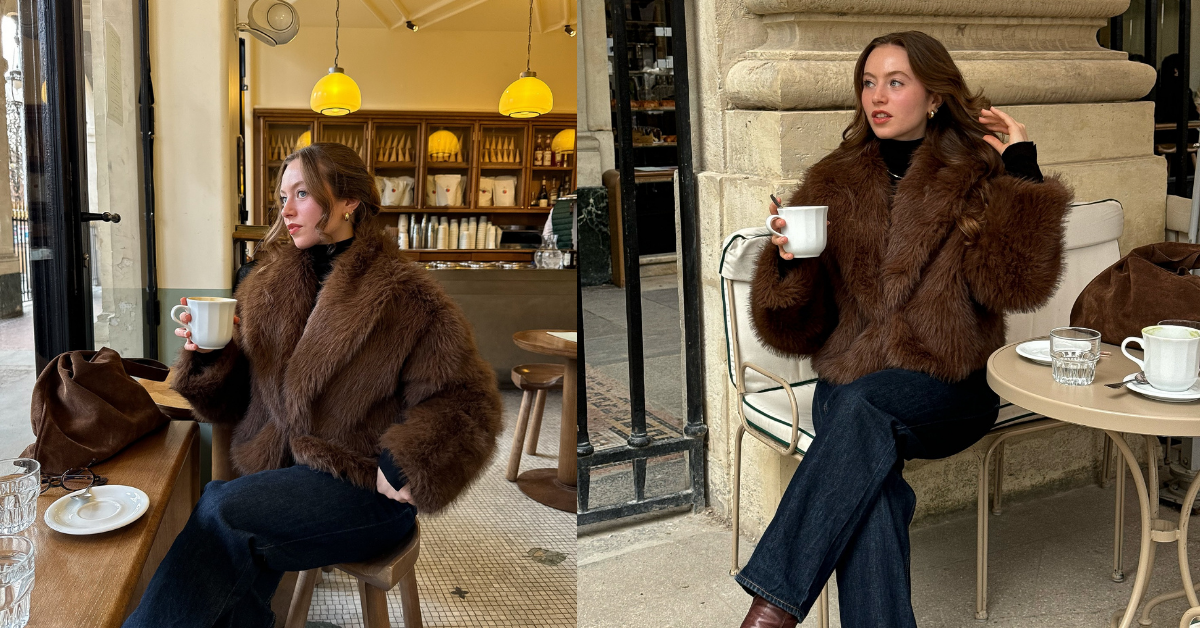
2) Texture is your best “quiet upgrade”
Instead of adding more color or more trends, mix textures:
- knit + wool coat
- denim + cashmere/wool
- leather (or coated denim) + soft knit
- suede + crisp cotton shirt under a sweater
Even Vogue calls out texture mixing as an easy way to make winter layering feel elevated.
3) The base layer matters more than people think
If your base is bulky (thick tee, scratchy sweater, oversized hoodie), everything on top looks and feels heavy.
A thin base layer keeps the outfit sleek and helps manage moisture and comfort. Wool and merino are often highlighted for moisture management and breathability by The Woolmark Company.
The pieces that give you “elevated, not heavy”
Smooth bases
- fitted long-sleeve tee
- thin turtleneck
- thermal base layer
- bodysuit (if you like it)
Avoid (if you hate bulk): thick hoodies under coats. They bunch at the neck and shoulders and make everything feel tighter.
Mid-layers that warm without looking puffy
- fine-gauge sweater
- cardigan worn like a top
- blazer under a coat
- sweater vest over a button-down
- thin quilted vest under a coat (surprisingly effective)
Outer layers that do the heavy lifting
- wool topcoat
- trench + warmer mid-layer
- insulated coat with clean lines (not necessarily sporty, just not overly detailed)
- leather jacket + scarf in fall
Shoes that instantly elevate
- sleek ankle boots
- loafers with a sock (fall, mild winter)
- knee-high boots (with a clean hemline)
- “clean” sneakers for casual days
Outfit formulas you can repeat all season
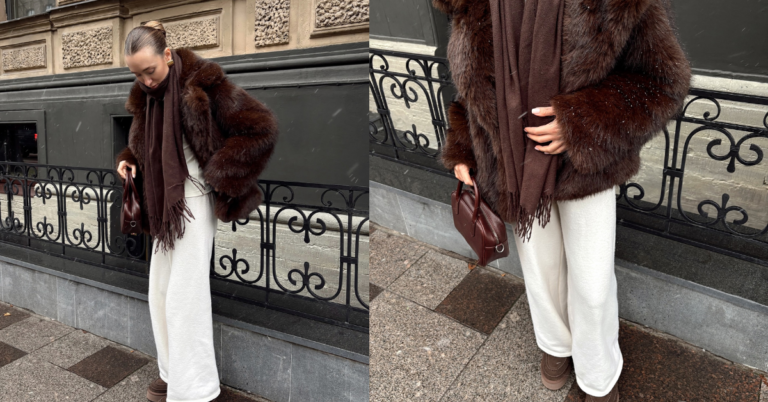
1) The clean column + long coat
Base: slim knit + straight trousers (or dark denim)
Outer: long wool coat
Finish: boots or loafers + structured bag
Why it works: the column keeps it sleek, the coat provides the drama without extra styling.
Tip: keep the under-layer close in tone (black, charcoal, navy, chocolate). It reads intentional fast.
Fashion sources have been leaning into monochrome and rich neutrals for fall and winter styling.
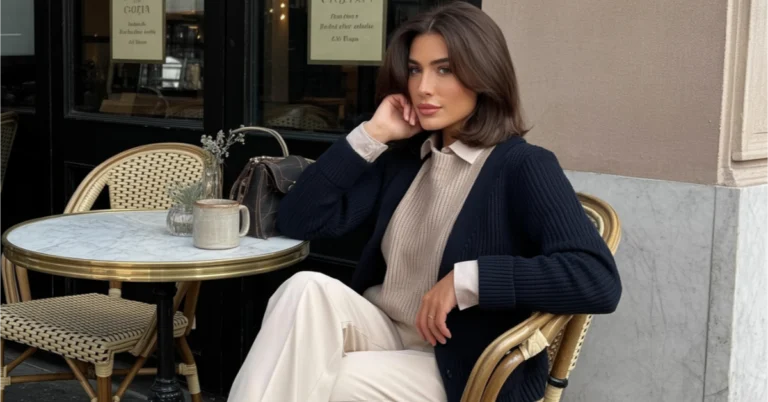
2) The sweater + shirt collar trick
Base: button-down shirt
Mid: crewneck sweater or sweatshirt
Bottom: straight jeans or tailored pants
Finish: loafers or boots
Why it works: that little collar and cuff detail adds “polish” without adding bulk.
(This shows up constantly in winter styling roundups, including recent coverage in woman-focused fashion media.)
3) Blazer layering, but make it warm
Base: thin turtleneck
Mid: blazer
Outer: coat (topcoat or trench)
Bottom: denim or trousers
Finish: boot, loafer, or clean sneaker
Why it works: you get structure at the shoulder (instant elevation), but you can keep everything else simple.
Optional: add a scarf. Skip it if it makes you feel “over-accessorized.”
4) The knit set that doesn’t look like loungewear
Base: matching knit top + knit pant (or same-color separates)
Outer: long coat
Finish: sleek sneaker or boot + real bag
Why it works: matching reads elevated, even when it’s comfortable. The coat gives it structure.
Trade-off (no perfect solution): knit pants can stretch or bag at the knee over a long day. Some fabrics recover better than others, but it still happens sometimes.
5) Wide-leg trousers, lighter top
Base: fitted long sleeve or thin turtleneck
Mid: cardigan or blazer
Bottom: wide-leg trousers
Outer: coat
Finish: pointed boot or loafer
Why it works: the trousers feel tailored, so you can keep the top simple and warm.
6) The “half-tuck + belt” fix for bulky knits
Base: thin tee or fitted base
Mid: sweater (not too long)
Bottom: jeans or trousers
Finish: belt + boot
Why it works: the belt breaks up the bulk and gives the outfit a shape, even if you keep the sweater cozy.
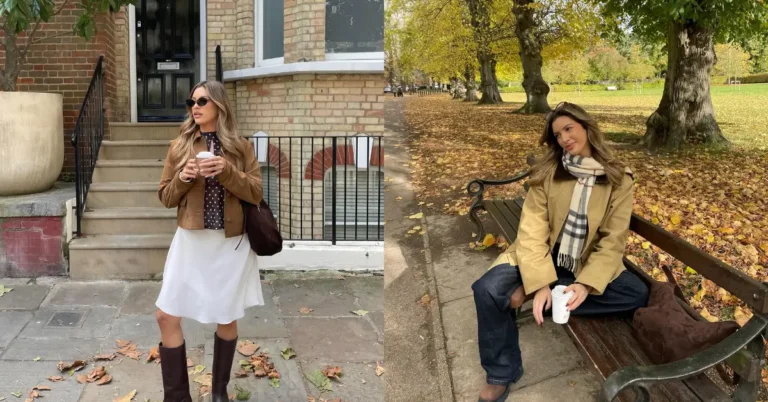
7) The fall uniform for busy days
Base: tee or thin knit
Mid: cardigan or light jacket
Bottom: straight jeans
Outer: trench or topcoat
Finish: loafers or sneakers
Why it works: it’s repeatable. You can swap colors and still look intentional.
How to stay warm without adding “more outfit”
Use warmth where it’s least visible
- a thin thermal base layer under your top
- warm socks and closed shoes
- a warmer coat instead of a thicker sweater
- a scarf that seals the neckline (wind matters)
Avoid cotton as your cold-weather base in damp conditions
REI notes that cotton absorbs moisture and insulates poorly when wet, which can leave you colder if conditions change.
You don’t have to go full “technical.” The point is simple: if you’re often cold, start by upgrading the layer closest to your skin.
Use fabric strategy, not outfit strategy
The Woolmark Company highlights merino’s ability to absorb and release water vapor quickly (hygroscopic properties), which supports comfort across temperature changes.
Variations by weather and lifestyle
If you live in a mild winter
- trench + thin knit + trousers + loafers
- leather jacket + scarf + straight denim + boot
- blazer + coat on colder days
If your winter is wet
- prioritize water-resistant outerwear and closed shoes
- keep a spare pair of socks in your car or bag (small habit, big comfort)
If you run hot indoors
- wear a lighter mid-layer and rely on a stronger coat
- choose layers you can remove cleanly (cardigan, blazer)
- keep the base smooth so you don’t overheat and feel trapped
If you walk a lot
- build outfits around one comfortable boot or sneaker
- elevate with coat + bag, not a delicate shoe
The 10-minute closet reset that makes winter style easier
- Pick 3 base tops (thin turtleneck, long sleeve tee, fitted knit).
- Pick 2 mid-layers (one sweater, one blazer/cardigan).
- Pick 2 outer layers (one everyday coat, one lighter option).
- Pick 2 shoes (one casual, one elevated).
- Pick one “finish” item (scarf, belt, earrings, or a structured bag).
Now you can make 15+ outfits without “trying.”
If you already have a winter uniform that works, you can skip this and just steal the outfit formulas above.
FAQ
How do I look elevated without dressing “fancy”?
Keep the palette calm, add structure (coat or blazer), and finish with a clean shoe and a real bag. One intentional detail is enough.
Why do my winter outfits feel bulky even when they’re cute?
Usually it’s bunching at the base layer or too many thick pieces stacked at the shoulders and neck. Swap in a thinner base and one medium mid-layer.
What’s the easiest way to stay warm without a huge sweater?
Use a thin thermal base layer and rely on outerwear for insulation and wind protection.
Can I wear sneakers in winter and still look polished?
Yes. Keep them clean and pair them with a structured coat and straight-leg pants. The coat does the elevating.
I hate scarves. What else works?
A higher neckline (turtleneck, mock neck) or a coat that closes well at the collar. Wind at the neck is a big comfort killer.
How do I do trends without looking overdone?
Pick one: a color trend, a shoe trend, or a silhouette trend. Then keep the rest classic.What if I’m always going between cold outside and warm inside?
Choose removable mid-layers (cardigan, blazer), and avoid overly thick bases. Fabrics that handle moisture and temperature shifts can help.
Just a little note - some of the links on here may be affiliate links, which means I might earn a small commission if you decide to shop through them (at no extra cost to you!). I only post content which I'm truly enthusiastic about and would suggest to others.
And as you know, I seriously love seeing your takes on the looks and ideas on here - that means the world to me! If you recreate something, please share it here in the comments or feel free to send me a pic. I'm always excited to meet y'all! ✨🤍
Xoxo Lara