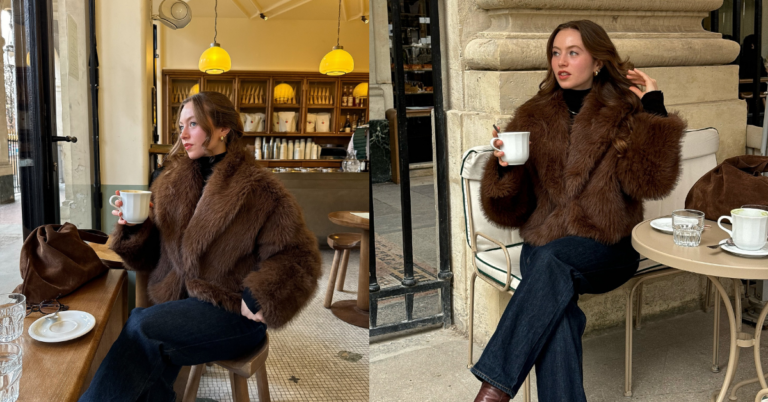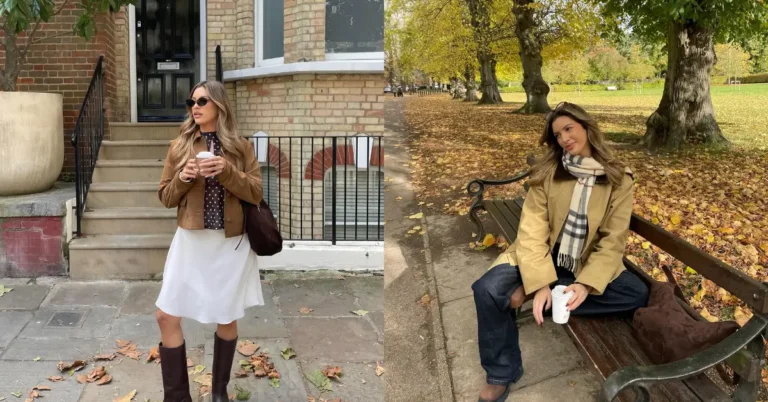

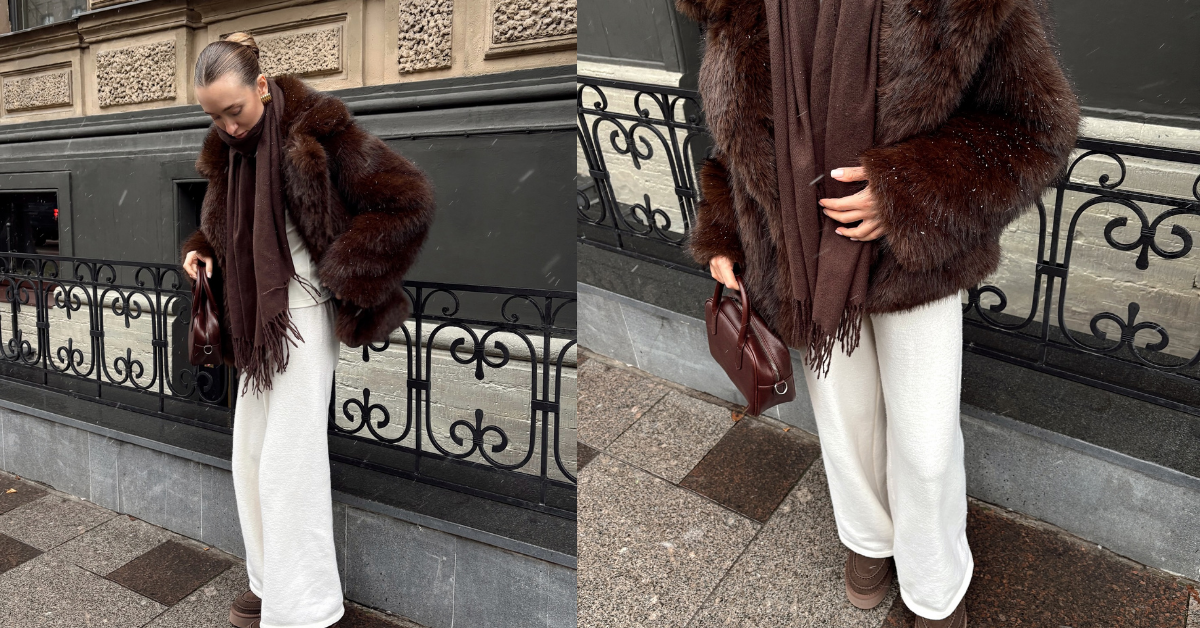
Cold weather has a way of turning “I have clothes” into “I have problems.” You step outside and the wind cuts through your outfit. You layer up, but suddenly you feel bulky, frumpy, or like your coat is wearing you. Then you overcorrect, dress “cute,” and spend the day cold and annoyed.
The fix is not buying more sweaters. It’s learning how warmth actually works: trap heat, block wind, manage moisture, and cover the spots where you lose heat fastest. Once you dress for those four jobs, style gets easier because your outfit stops fighting the weather.
This guide gives you a practical system you can repeat all winter: what to wear in different cold conditions, which fabrics matter most, how to layer without looking puffy, and outfit formulas that still look like you.
Quick answer for skimmers
- Use a 3-layer system: base (comfort + moisture) + mid (warmth) + outer (wind/rain barrier).
- If it’s windy, treat the “feels like” temp as real. Wind increases heat loss from exposed skin.
- Your coat should have a job: windproof, water-resistant, or insulated (sometimes two).
- Warmth is often lost through head, hands, neck, and feet, so accessories are not optional on truly cold days.
- Avoid staying in wet clothing. Getting dry fast matters for comfort and safety.
- The fastest way to look stylish in winter is to repeat a simple base outfit and rotate outerwear + accessories.
- If you hate bulky layers, keep the bulk on the outside (coat) and keep inner layers thinner.
If you only do one thing:
Get one outer layer that blocks wind well, and build everything else underneath it. Wind is the cold-weather style killer.
The decision framework: dress for conditions, not vibes
Before you get dressed, answer these:
1) How cold is it and how long are you outside?
- Quick errands + mostly indoors: you can prioritize style, then add a warm coat.
- Walking, commuting, standing outside: you need real layering, not just a cute sweater.
2) Is it windy?
Wind chill is about faster heat loss from exposed skin.
If it’s windy, a “warm” coat that leaks air won’t feel warm.
3) Is it wet?
Wet plus cold is where discomfort turns into a problem fast. Prioritize a barrier layer and shoes with traction.
4) Are you likely to overheat indoors?
If yes: build in removability (zip layers, button layers, scarf you can take off). A perfect outdoor outfit can feel miserable in overheated buildings.
One honest limitation: This won’t work if you refuse to carry anything. Winter comfort often means you’ll take off a hat, scarf, or mid layer. If you hate carrying extras, you’ll occasionally be too hot or too cold. That’s the trade.
The winter layering system that actually works
Outdoor layering advice exists for a reason: it’s the most reliable way to stay warm across changing conditions.
You can apply it to everyday outfits without looking like you’re heading up a mountain.
Layer 1: Base layer (next to skin)
Job: stay comfortable and manage moisture.
If you sweat and that moisture sits on your skin, you get colder later.
Good everyday base options:
- Ribbed tee, fitted long sleeve, thin knit
- Lightweight merino base (especially if you run cold or walk a lot)
- In a pinch: any comfortable top that layers smoothly under mid layers
If you’re active or sweating: moisture management matters more.
Layer 2: Mid layer (the warmth)
Job: trap heat. This is your insulation layer and it does most of the warming.
Great mid layers for real life:
- Sweater (fine knit is easier to layer than chunky)
- Cardigan (easy on, easy off)
- Fleece or sweatshirt (sporty lane)
- Light insulated vest (warm core, free arms)
Layer 3: Outer layer (the shield)
Job: block wind and precipitation, and sometimes add insulation.
The Centers for Disease Control and Prevention advises wearing warm clothing in several loose layers and using a tightly woven, wind-resistant coat or jacket.
That “tightly woven” part is a style tip in disguise: air leakage is why some coats look great but feel useless.
Outerwear “jobs” (pick based on your winter):
- Windy: tightly woven wool coat, trench-style coat, wind-resistant shell
- Wet: rain shell, water-resistant parka, hooded coat
- Very cold: insulated parka, puffer, down or synthetic fill
Fabrics that keep you warmer without adding bulk
You don’t need to memorize fiber science. You just need to know what tends to work.
Merino and wool blends
The The Woolmark Company highlights research showing wool’s moisture buffering and thermoregulation benefits compared to other fibers.
Translation: it can feel comfortable across temperature swings, especially as a base or mid layer.
Fleece
Lightweight warmth, easy care, great mid layer. Not windproof by itself, so pair it with a real outer layer.
Down vs synthetic insulation
- Down: excellent warmth-to-weight, packs down well, can lose performance when wet unless treated.
- Synthetic: tends to retain warmth better when damp, often slightly bulkier.
There’s a trade-off here with no perfect solution: down often looks sleeker for the warmth, but if your winter is wet and slushy, synthetic can be less fussy. You pick your headache.
Cotton
Cotton can be fine for low-sweat indoor days, but for active cold weather, moisture management is the issue.
If you’re walking fast, commuting, or shoveling snow, consider a base layer that handles sweat better.
How to stay warm without looking bulky
This is where most people get stuck. Here’s what actually helps.
1) Keep the bulk on the outside
A thin base + warm mid + structured outer looks cleaner than a chunky sweater trapped under a tight coat.
2) Create one clear silhouette
Pick one “line” and commit:
- Slim inside, big coat outside (leggings or straight jeans + long coat)
- Wide leg, fitted top (wide trousers + fitted knit + coat)
- Monochrome column (same color family top and bottom) for instant polish
3) Use accessories as style tools
Warmth and style overlap here:
- Hat: beanie, wool cap
- Neck: scarf, knit neck warmer
- Hands: lined gloves or mittens
- Socks: thicker socks with boots
And it’s not just comfort. The National Weather Service recommends dressing in layers and covering exposed skin to reduce frostbite and hypothermia risk in extreme cold.
4) Make your coat look intentional
Small details matter:
- Roll sleeves to show a cuff
- Use a belt (coat belt or added belt)
- Keep a clean bag shape (crossbody, tote, structured backpack)
My slightly opinionated take: If you want to look put-together in winter, stop trying to “save” an outfit with a complicated top. Let the coat be the outfit. A great coat plus simple layers beats a fussy sweater every time.
Outfit formulas you can copy
These are built to feel real, not runway.
1) The everyday polished formula
- Base: fitted long sleeve or fine knit
- Mid: cardigan or sweater
- Bottom: straight jeans or trousers
- Outer: wool coat or structured parka
- Shoe: ankle boot or clean sneaker
- Accessory: scarf + simple earrings
2) The sporty warm formula
- Base: tee or thermal
- Mid: fleece or sweatshirt
- Bottom: relaxed jeans or leggings
- Outer: puffer or insulated parka
- Shoe: sneaker or winter boot
- Accessory: beanie + gloves
3) The “I’m outside a lot” formula
- Base: moisture-managing layer
- Mid: warm sweater or fleece
- Outer: wind-resistant, insulated coat
- Bottom: lined trousers or jeans with warm socks
- Shoe: waterproof boot with traction
- Accessory: scarf that fully covers neck
4) The dress or skirt winter formula
- Base: fitted top
- Bottom: warm tights + midi skirt, or sweater dress
- Outer: long coat (longer than the hem looks best)
- Shoe: tall boot or ankle boot
- Accessory: scarf + hat
5) The “I hate being cold indoors too” formula
- Base: soft long sleeve
- Mid: cardigan you can keep on inside
- Outer: coat you can easily remove (not a complicated pullover situation)
- Shoe: easy-on boots or loafers with socks
This is optional. Skip it if you live somewhere with consistent heating and you’re mostly in the car.
Cold-weather comfort mistakes (and easy fixes)
Mistake 1: Your coat leaks air
Fix: choose a coat that blocks wind, or add a wind-resistant layer on top. Wind chill is about heat loss, not just “cold air.”
Mistake 2: You’re warm at first, then freezing later
Fix: moisture management. The REI layering guidance emphasizes base layers wicking perspiration away from your skin to help keep you from becoming chilled.
Mistake 3: You ignore your neck and hands
Fix: scarf + gloves. It’s a small add that changes the whole day.
Mistake 4: You try to wear “cute” shoes in winter conditions
Fix: choose footwear for your real surfaces (ice, slush, wet sidewalks). If your feet are cold or slipping, the outfit is not worth it.
Mistake 5: You stay in wet clothing
Fix: change into dry layers as soon as you can. Cold-weather safety guidance emphasizes getting warm and removing wet clothing.
If you’re dressing kids too
Quick safety note: Head Start cold weather guidance includes dressing children in layers and keeping scarves tucked inside coats to prevent strangulation hazards.
Also, if layers get wet, having something dry underneath helps.
FAQ
How do I know if I need a base layer?
If you’re outside more than 15-20 minutes, walking a lot, or you tend to sweat then get cold later, a real base layer helps. Moisture management is the main benefit.
Is wind chill “real” or just a number?
It’s real in the sense that wind increases heat loss from exposed skin, making it feel colder and raising frostbite risk. It does not mean objects cool below the air temperature.
What’s the warmest coat type?
In truly cold weather, an insulated parka or puffer can be the warmest, especially with good wind protection. But warmth depends on conditions (wind, wet, time outside) and your layers underneath.
How do I look stylish if I have to wear a puffer?
Make one thing intentional:
- Monochrome outfit underneath
- Structured bag
- Sleek boots
- Clean beanie + scarf set
Treat the puffer like a statement piece and keep the rest simple.
What if I run hot indoors and cold outdoors?
Build removability: zip mid layer, coat that’s easy to take off, scarf you can remove quickly. Avoid layers that trap you in one temperature.
How do I stay warm without spending a lot?
Spend on the highest leverage items:
- A wind-blocking outer layer
- Warm, comfortable shoes
- Accessories that seal gaps (hat, scarf, gloves)
Any safety basics I should know?
Know signs of hypothermia risk and take cold exposure seriously. The Centers for Disease Control and Prevention provides prevention guidance that includes getting to a warm place and removing wet clothing.
Just a little note - some of the links on here may be affiliate links, which means I might earn a small commission if you decide to shop through them (at no extra cost to you!). I only post content which I'm truly enthusiastic about and would suggest to others.
And as you know, I seriously love seeing your takes on the looks and ideas on here - that means the world to me! If you recreate something, please share it here in the comments or feel free to send me a pic. I'm always excited to meet y'all! ✨🤍
Xoxo Lara